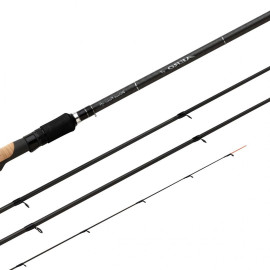
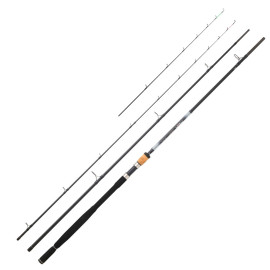
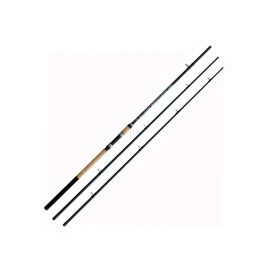
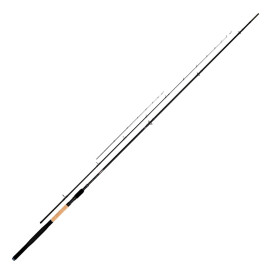
The Tubertini Styx Feeder rod is ideal to enjoy bait or method fishing. Its blank stands out for its thinness, designed with a very progressive continuous action , particularly reactive, fast and with a large power reserve, excellent for fighting large fish.
Specs:
Rod for English fishing.
Two sizes to choose from.
Equipped with three dropouts of different powers:
Styx Feeder Tip 0.75 Oz - 530 mm - Ø 2.20 mm
Styx Feeder Tip 1.00 Oz - 475 mm - Ø 2.20 mm
Styx Feeder 1.50 Oz - 425 mm - Ø 2.20 mm
Styx Feeder 0.50 Oz - 550 mm - Ø 2.20 mm (extra tip)
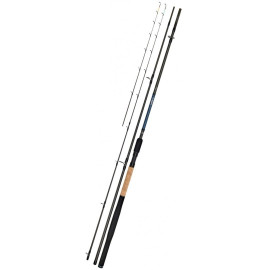
The Shimano Aero X5 Distance Heavy Power Feeder rod is made with the XT60 + HPC + NANO carbon blank that gives it resistance, but at the same time they are light and with great sensitivity. It has 3 interchangeable dropouts and the rings are double-legged with a wide diameter to improve launch...
The Shimano Aero X7 Distance Feeder rod is made with the XT200 + HPC + NANO carbon blank that gives it great resistance and at the same time is very light, and ultra sensitive in the bite. It features the lightweight, anti-tangle Kigan 3D Zirconia rings and the reel seat embedded in the Fuji...
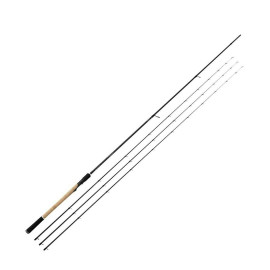
The N'Zon Feeder rod is designed to cover all the needs of feeder fishing in Europe, thanks to the technologies applied in its construction. The blank is very light and balanced, made with HVF technology. This model allows a good grip on the handle, thanks to the flattened design of the...
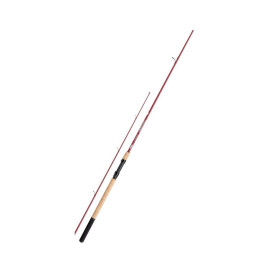
La caña Mitchell Tanager 2 Red Feeder ha sido fabricada especialmente para el pescador principiante, siendo construida con un blank fuerte y muy fiable . Está compuesta por dos puntas de carcaj de vidrio diferentes, disponiendo así de una punta más liviana y otra más pesada. Con empuñadura...
The Shimano Aero X7 Precision Feeder rod is made with the XT200 + HPC + NANO carbon blank that gives it great resistance and at the same time is very light, and ultra sensitive in the bite. It features the lightweight Fuji Alconite KR anti-tangle guides and the reel seat embedded in the Fuji...
La Caña Daiwa N´Zon Super Slim Feeder cuenta con black fino para facilitar el manejo de la caña y aumentar las sensaciones de la pesca. A continuación, detallamos sus características clave: Blank carbono alto módulo : Los hilos de carbono de alto módulo, tejidos como capa, reciben una...
The Lineaeffe TS Impulse Feeder rod represents the best that the market can offer with respect to the Feeder technique. The variety of weights and lengths means that the Impulse Feeder pure carbon fishing rod is one of the best sellers. These fantastic rods are available in 4 cast iron...
La Caña Daiwa N´Zon Feeder EXT cuenta con una original construcción con talón telescópico que reduce el tamaño de estas cañas de dos tramos, ayuda a que los pescadores al acecho se puedan mover buscando diferentes puestos de pesca. A continuación, detallamos sus características clave: Blank...
¿Cómo saber cuál es la caña que a mi me conviene? Son muchas las cosas a tener en cuenta y no dudes en consultar a nuestros expertos.
LONGITUD
RESISTENCIA
MEMORIA DE UNA CAÑA
ACCIÓN
MATERIAL
PESO
ARMADO
EMPUÑADURA
LONGITUD
El tamaño o longitud de la caña es uno de los puntos más importantes. Opta por una caña cuya longitud nos permita maniobrar y efectuar el lanzamiento del aparejo o señuelo, con suma comodidad.
No hay nada peor que pescar con una caña que se encuentre fuera de nuestro tamaño, tanto hacia lo grande como hacia lo pequeño, puesto que sin duda lo único que conseguiremos serán lances errados que no obtendrán ningún resultado.
RESISTENCIA
Es decir, la capacidad de la caña para resistir la lucha contra el pez.
No debemos caer en el error de pensar que la más fuerte es la mejor. La resistencia de una caña no es una característica que nos indique calidad, sino que es una condición del elemento; en otras palabras, la caña debe resistir simplemente para lo que fue hecha, si así no sucediera, no serviría.
En función de la resistencia de la caña podemos hacer la siguiente clasificación:
Ultra-ligeras.
Ligeras.
Medias.
Pesadas.
Ultra-pesadas.
Cuanto más ligera sea la resistencia de la caña significará que es válida para peces de pequeño tamaño, el cual irá incrementándose a medida que aumentamos la resistencia.
Elegir una resistencia inadecuada para la especie que tratamos de pescar hará que la caña no nos haga llegar (o lo haga equivocadamente) las sensaciones que el pez transmite durante la pelea, haciendo que la acción de pesca se complique.
MEMORIA DE UNA CAÑA
La forma natural de una caña es recta; sin embargo la acción de pesca supone una constante flexión. Pues bien, al flexionarla la caña ofrece una resistencia que es igual a la fuerza aplicada pero de sentido opuesto, es decir, una reacción.
La velocidad con que vuelve a tomar su estado anterior es lo que se denomina comúnmente reacción de la caña o "memoria".
La caña debe tener la reacción o memoria adecuada para que el pescador no pierda sensación de pesca, para efectuar el lance en forma satisfactoria o para clavar la pieza en caso de que sea necesario.
ACCIÓN
Peso máximo al que se puede someter la caña en el momento del lance. Se expresa en gramos, normalmente con dos números, que nos indican el tramo de peso que la caña soporta sin problemas.
Cada caña está pensada para un tipo de pesca en concreto, en función del cual se establece el nivel de flexión que podrá alcanzar y el límite de esfuerzo que puede llegar a soportar.
En este sentido, se distinguen tres momentos en el lance:
Zona crítica: momento en el que la punta de la caña está sometida a la mayor carga, pudiendo vencer su resistencia y romper con facilidad.
Zona de fuerza: posición óptima para la caña, donde podrá hacer los mayores esfuerzos y se utiliza correctamente.
Zona de tensión: posición en el que el carrete y la línea sufren la mayor tensión.
Al lanzar la caña se flexiona de diferentes formas. De acuerdo a la forma que tome la curva, las cañas se clasifican en:
Cañas de acción rápida o de punta: tienden a doblarse en su punta. Otorgan mayor sensación de pesca pero resultan menos eficaces a la hora de realizar lances largos.
Cañas de acción media: doblan en el medio de la caña. Dan una buena sensación de pesca y son adecuadas para lances medios.
Cañas de acción lenta o total: doblan en toda su longitud. Resultan las más adecuadas para lances largos.
MATERIAL
Actualmente el mercado nos satura con la gran cantidad de materiales que nos ofrece:
Fibra de vidrio (maciza o hueca).
Fibra de carbono o Grafito.
Kevlar: resina muy fuerte y a la vez muy ligera que se utiliza en blindajes de chalecos y vehículos y que en la actualidad está siendo introducida en la fabricación de cañas de pescar, aunque su alto precio hace que su uso no esté muy extendido.
Compuesta: mezcla de fibra de vidrio, grafito, kevlar u otros materiales.
También existen otros menos presentes en el mercado.
El objetivo principal es que la caña tenga la mayor reacción posible, o sea la mayor velocidad para retornar a su estado natural recto.
Con todos los materiales se puede lograr los tres tipos de acciones anteriormente nombrados.
Si hay algo que destacar de la fibra de vidrio es que apenas necesita cuidados de mantenimiento. Además, su poco peso, su gran reacción y su extraordinaria resistencia y flexibilidad, unido hoy a la gran variedad de modelos y bajo costo, hacen que las cañas de fibra de vidrio se posicionaran en primer lugar de ventas hace algunos años .
Hoy en día, la fibra de vidrio ha sido superada por el grafito. A pesar de que su coste es más elevado, poseen mayor reacción y un peso menor.
Existen asimismo las denominadas “cañas compuestas”, en las que se trata de conjugar todos los beneficios de los diferentes materiales que existen, combinando peso, reacción y costo.
PESO
Hay que tener en cuenta que pasaremos muchas horas “cargando” de la caña, pero no sólo eso, sino que además deberemos realizar un esfuerzo físico en cada lance; y con seguridad nos arrepentiremos si el peso de la caña resulta excesivo.
La caña deberá poseer el peso que creas conveniente, ya que no siempre lo más liviano es mejor, no se nos debe olvidar que en el caso de necesitar efectuar con equipo de pesca variada de costa lances largos, las cañas con mayor peso tienen mayor rendimiento; el peso deberá elegirse en función del tipo de pesca que vayamos a realizar.
ARMADO
La caña debe tener un correcto armado en cuanto a la posición y tipo de pasahilos, mango adecuado, etc.
Un aspecto importante en la caña son las guía, anillas o anillas guías de la caña que es un dispositivo de guía del sedal de pesca diseñado para no ofrecer fricción, dureza y a su vez que sean livianas y no agreguen mayor peso a la caña.
Deben mantener la sensibilidad de la caña, evitar que el hilo se tuerza, ayudar a que las distancias de tiro sean mayores y mantener el balance de la caña.
EMPUÑADURA
Es la que va a permitir el paso de sensaciones desde la punta de la caña hasta la mano, un conjunto de sensaciones que resultan imprescindibles a la hora de conseguir los resultados deseados:
Funcionalidad: esto es, la capacidad de la empuñadura para proporcionar al pescador un soporte adecuado para manipular la caña.
Una empuñadura funcional permitirá una mejor transferencia de energía de la mano y brazo del pescador hacia la caña y la línea.
Ergonomía: cualidad que permite al pescador manipular la caña con comodidad y eficiencia, minimizando el esfuerzo. Una caña debe estar equipada con un mango de tamaño y forma coincidentes con el número y potencia de la caña, así como a las medidas estándar de las personas. Una empuñadura bien diseñada resulta en mejor rendimiento y menor cansancio.
Calidad: basada principalmente en el tipo de material con el que esté construida, del que dependerá la durabilidad, las sensaciones transmitidas, el peso, etc.
Uno de los materiales que más se usan actualmente es el denominado “EVA Foam” (Ethylene Vinyl Acetate). Se trata de un material sintético que posee las características adecuadas para la confección de empuñaduras de toda clase. Su índice de compresión, dado por la densidad del material, su resistencia y otras propiedades han encontrado lugar en las cañas de mosca.