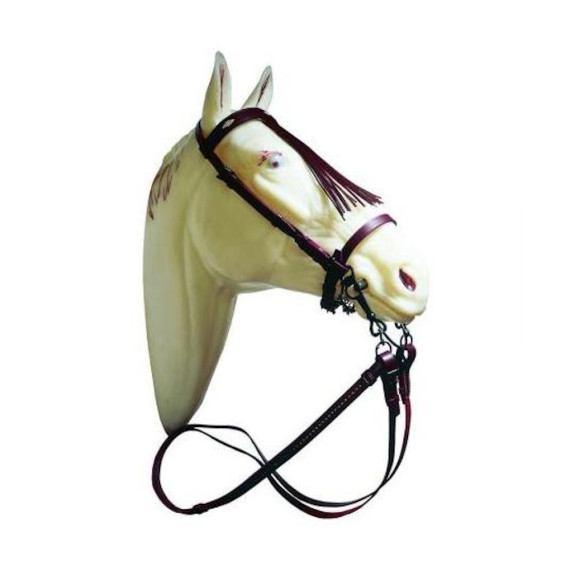
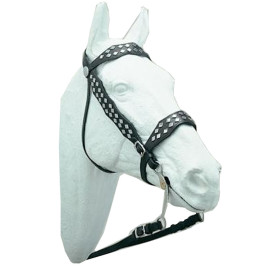
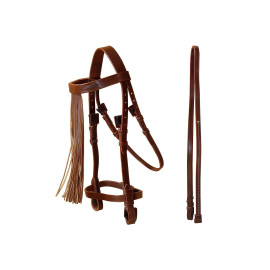
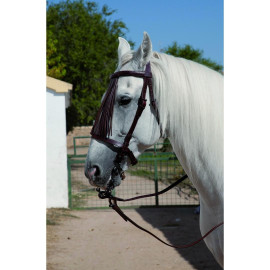
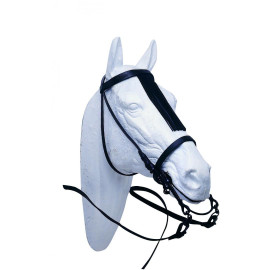
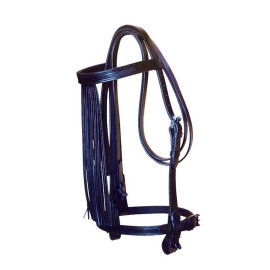
Reinforced Jerezana de Marjoman headdress incorporating pork mosquito, drowning and reins. Made of materials of exceptional quality. Colors : Brown and Black
Descubre la nueva Cabezada Vaquera de Cuero Ancha Ronda , una pieza que rinde homenaje a la tradición ecuestre española del siglo XX. Inspirada en las cabezadas vaqueras tradicionales, la cabezada destaca por su frontalera notablemente ancha con elegantes adornos de piña e hilo en contraste....
Cabezada Marjoman Española con Riendas Cabezada fabricada en España por Marjoman con materiales de primera calidad. Características Con mosquero y piña decorativa en la frontalera Riendas incluidas
CÓMO COLOCAR LA CABEZADA
A la hora de colocar la cabezada lo primero que deberemos tener en cuenta es el estado anímico del animal; puede que éste se muestre tranquilo, facilitándonos enormemente la labor; pero también resulta muy probable que esté nervioso y levante la cabeza, como evitando ser "enganchado"; conviene saber cómo actuar en cualquiera de estas situaciones.
COLOCAR LA CABEZADA A UN CABALLO TRANQUILO
Comprueba que la muserola y el ahogadero se encuentran desabrochados.
Coloca la hebilla de las riendas sobre la testera y cuelgue la cabezada en su hombro izquierdo (asegurándose de que la frontalera está hacia fuera).
Sitúate a la izquierda del caballo. Coge la cabezada de la cuadra quítele el ronzal.
Pasa las riendas por encima de la cabeza del caballo, sujetándolas al cuello mientras le quitas la cabezada de cuadra. Cuelga la cabezada de cuadra después de quitársela, puesto que de otro modo el caballo puede enredarse con ella.
Coge la brida, tomándola por la testera con la mano derecha y dejando reposar la embocadura en la mano izquierda o viceversa, como te resulte más sencillo.
Acerca la embocadura a los labios del caballo e introduce el pulgar en la comisura de la boca, lo que le obligará a abrirla.
En el momento en que el animal abra la boca, introduce suavemente la embocadura, mientras levantas la cabezada hacia las orejas.
Cuando tengas la cabezada dentro de la boca, podrás utilizar la mano izquierda para pasar la cabezada suavemente por las orejas del caballo.
Ajusta la muserola y el ahogadero.
COLOCAR LA CABEZADA A UN CABALLO INQUIETO
Sin lugar a dudas, resultará mucho más dificultoso colocar la cabezada a un caballo que se muestra inquieto y eleva la cabeza. Si ese es tu caso, te recomendamos que sigas los siguientes pasos:
Comprueba que la muserola y el ahogadero se encuentran desabrochados.
Coloca la hebilla de las riendas sobre la testera y cuelga la cabezada en su hombro izquierdo (asegurándote de que la frontalera está hacia fuera).
Sitúate a la izquierda del caballo. Coge la cabezada de la cuadra y quítale el ronzal.
Pasa las riendas por encima de la cabeza del caballo, sujetándolas al cuello mientras le quitas la cabezada de cuadra. Cuelga la cabezada de cuadra después de quitársela, puesto que de otro modo el caballo puede enredarse con ella.
Sujeta la cabezada con la mano izquierda. Pasa el brazo derecho por debajo de la mandíbula del caballo y alrededor de la cabeza, sujetándosela con la mano.
Coge los montantes con la mano derecha sin dejar de sujetarle la cabeza, para que no pueda levantarla.
Utilica el pulgar para que abra la boca e introduzca la embocadura, mientras subes la cabezada hacia las orejas. En todo momento deberás mantener la mano apoyada en la cabeza del caballo para que no pueda levantarla.
Cuando tengas la cabezada dentro de la boca, podrás utilizar la mano izquierda para pasar la cabezada suavemente por las orejas del caballo.
Ajusta la muserola y el ahogadero.
AJUSTE DE LA CABEZADA
Una vez hemos logrado colocar la cabezada al caballo, ésta deberá ser ajustada correctamente, para garantizar la máxima seguridad y comodidad.
Comprueba uno a uno cada elemento de la cabezada:
Carrilleras: ten en cuenta que acortándolas o alargándolas modificarás la posición de la embocadura.
Testera: debe reposar sobre la nuca del caballo. Los montantes deben abrocharse a ambos lados de la testera, a la misma altura y justo por encima de los ojos.
Frontalera: debe estar lo suficientemente baja para no rozarle las orejas al caballo. Una vez que ha sido abrochada, deberá haber la suficiente holgura para poder pasar los dedos con comodidad. Ten en cuenta que si resulta demasiado larga, se desplazará hacia atrás y si es muy corta, presionará sobre la base de las orejas, causando pellizcos y rozaduras.
Ahogadero: una vez ajustado, deberá hacer el suficiente espacio para poder pasar la mano entre el mismo y la quijada del caballo. Si está demasiado apretado dificultará la respiración al bajar el caballo la cabeza y el cuello.
Muserola: tras su ajuste deberá haber el espacio suficiente para pasar dos dedos entre la muserola y la quijada. Debe estar a una altura aproximada de 2,5 cm por debajo del hueso del carrillo.
En caso de que el caballo vaya a ser embridado o conducido a la cuerda, las riendas deberán cruzarse y hebillarse alrededor del cuello.
La cabezada es el armazón de correas que se coloca en la cabeza del caballo y a través de él guiamos al caballo mediante las ordenes que damos con las riendas.
De forma general las cabezadas se confeccionan en cuero pero también existen modelos más económicos fabricados en nylon o materiales sintéticos con características especiales como en el caso de las cabezadas de “Raid”. TIPOS DE CABEZADAS
Cabezadas de cuadra: Bastante simples y sencillas de usar, ya que el uso habitual es para llevar al caballo de la mano y atarlo. El material más común es el nylon o el cuero. Las cabezadas hechas de cuero tienen mayor duración, pero su precio se encarece en comparación con las de nylon, de menor calidad.
Cabezadas de dar cuerda: Utilizadas por jinetes en ejercicios en los que éstos se sitúan en tierra dirigiendo al caballo. Van provistas de serreta, que se trata de una parte de cuero situada por encima de la nariz, habitualmente están hechas de un tipo de cuero más fuerte y acompañadas de uno o más aros en la parte superior de la misma para poder enganchar la cuerda.
Cabezadas de montar: Las habituales en las disciplinas de doma clásica o salto de obstáculos. Se componen de exactamente todas las piezas de la cabezada de dar cuerda.
Cabezadas vaqueras: Muy parecidas a la cabezadas de montar, con la inclusión de un mosquero, que son tiras de cuero situadas sobre la frente a fin de espantar las moscas de los ojos del caballo. Su uso se centra principalmente en la disciplina de doma vaquera.
Cabezadas bordadas: Son aquellas que cuentan con bordados y ornamentación para engalanar el caballo ya sea en concursos morfológicos, enganches o para ferias de caballos.
PARTES DE UNA CABEZADA
Frontalera
Ahogadero: está anudado a la altura de la quijada del caballo, y se tiene que poder pasar una mano entre el ahogadero y la quijada del caballo.
Muserola: si bien no es necesaria que la cabezada la tenga es recomendable.
Embocadura: la embocadura es la parte de la cabezada situada dentro de la boca del caballo, es la parte en la que pueden dar bocados. Existen varios tipos;
Los filetes se dividen en dos partes, en cambio los bocados son de una sola pieza.
Los bocados son más duros para la boca del caballo, por lo que hay que tener cuidado de no tirar fuerte de las riendas.
Los pelhams son una variante de embocadura para caballos que no acatan el filete, pero sin embargo son poco precisos y deben utilizarlos jinetes con experiencia.
ELEGIR LA TALLA ADECUADA
Elegir el tamaño adecuado para nuestro caballo es un factor esencial, a pesar de que en muchas ocasiones no se tiene este factor en cuenta.
Debemos saber que existen varias tallas para cada cabezada a pesar de que lo más habitual es la talla FULL o STANDARD.
Las tallas generalmente se dividen en las siguientes categorías asignadas en algunos casos a razas de caballos. Aunque no es una regla fija puesto que esto puede variar según la línea del caballo:
FOAL (potro) = cabeza muy pequeña
COB (caballo árabe)= cabeza pequeña y muy fina
FULL ( standard) = cabeza tipo Arabe, PSI, Anglo árabe, Centro europeos pero de cabeza fina
XL (extra grande)= Silla francés, Hannoverianos, y todas las lineas de Centro Europeos de cabeza ancha.
Será conveniente confirmar que es el tamaño correcto para la cabeza de nuestro caballo y donde mejor se puede comprobar es en la frontalera, porque tanto la muserola como el ahogadero son ajustables y no nos marca si es la talla correcta pero la frontalera no nos deja dudas.
Por tanto debemos fijarnos en lo siguiente: Si no podemos introducir 2 dedos en la frontalera es que la cabezada es pequeña y estará empujando las orejas hacia adelante haciendo sentir al caballo incómodo e incluso puede que muestre algún signo de protesta que no hayamos apreciado.